

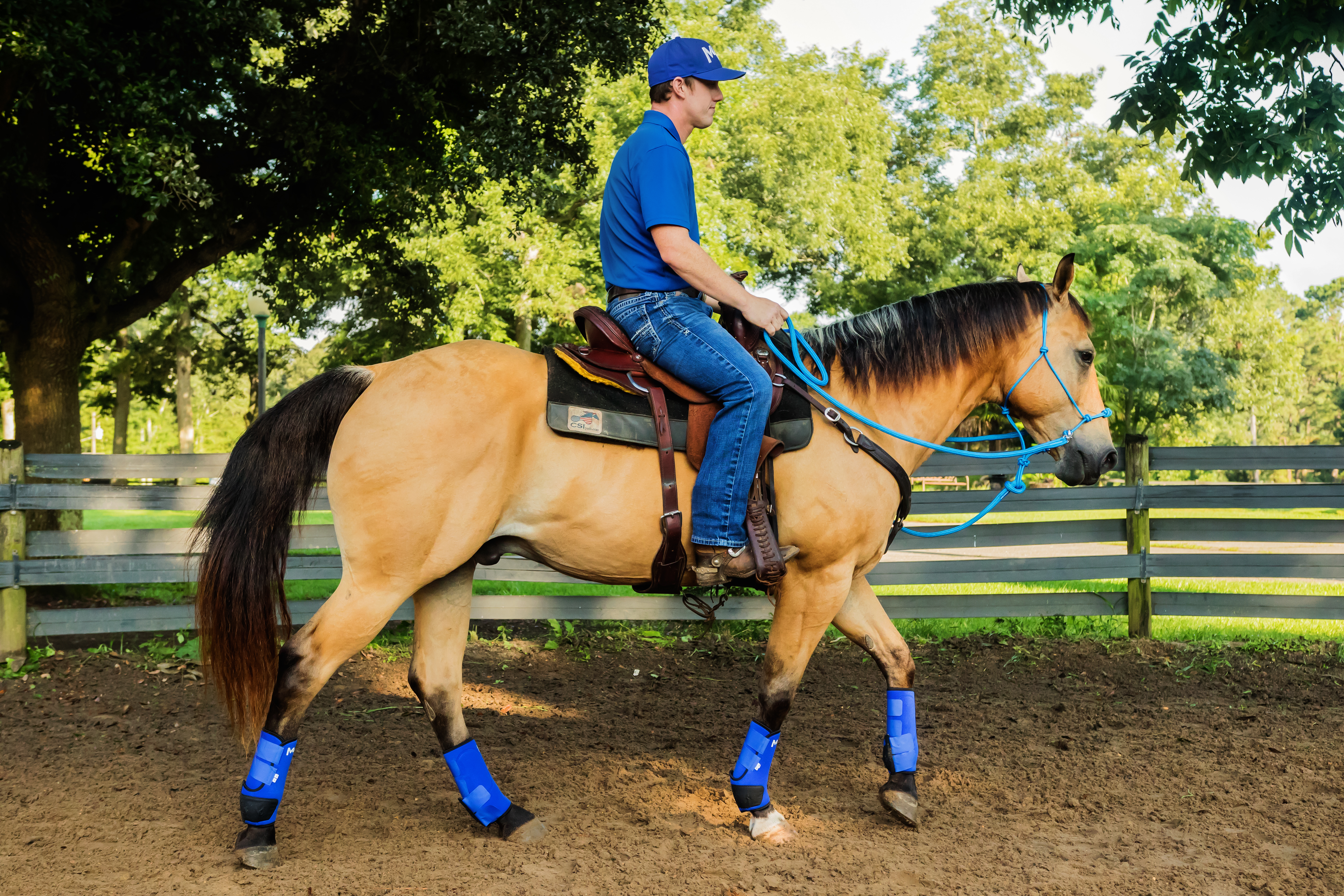
Today we are talking about how to smoothly transition from a halter to a bit.
Watch The Video Here Or Continue Reading Below!
Introduction To Transitioning From A Halter To A Bit
What's going on world, it's Michael Gascon, the Horse Guru, and today I've got a hot topic for all you equestrians out there. I'm here to shed light on the exact order I follow when transitioning from my Gascon Horsemanship halter to bits. This recipe has been a key to success for me, and I'm excited to share it with you.
STARTING WITH THE BASICS: THE HALTER
First and foremost, every horse I ride begins with a halter. Whether it's a seasoned pro or a feisty bronc, I want to understand how they respond to the most basic pressures. Riding with a halter on the outside of their face helps me gauge the horse's respect and responsiveness to pressure. I focus on specific knots and configurations to ensure effective communication without overwhelming the horse.
Transitioning To The Snaffle: Building On Basics
Once I've established control and communication with the halter, I move on to a snaffle. I prefer a full cheek snaffle for its soft mouthpiece and broad surface area, mimicking the halter's pressure dynamics. This step is crucial to get the horse accustomed to having something in its mouth while maintaining the control I've established with the halter.
INTRODUCING SHANKS: PROGRESSING WITH PURPOSE
To advance the horse's training, I introduce a snaffle with shanks. This adds a new dimension to the horse's response by incorporating lateral control. The shanks help refine the horse's movements and responsiveness, setting the stage for more advanced maneuvers. I will go to a more advanced bit like this with shanks, if I am looking for more shoulder movement, spins, lead changes, and gaiting.
The Solid Curb Bit: Firm And Consistent
For my show horses and those ready for a solid, consistent experience, I opt for a small, solid bit. This bit lacks the movement seen in previous ones, offering a high level of consistency. It ensures that the horse maintains a soft touch and responds confidently to commands.
Conclusion
In the world of horsemanship, success lies not in the pressure applied but in the horse's education. My tried-and-true recipe—starting with a halter, transitioning through snaffles and shanks, and culminating in a solid bit—has been the key to my success in the saddle. So, if you're looking to build a strong, respectful partnership with your horse, give this recipe a go, and I promise you'll enjoy a rewarding journey with your equine companion. Thanks for watching, and happy riding!
Check out more free training resources HERE!
HOW SAFE IS YOUR HORSE?
Can you control every part of his body, even if he’s scared or unsure?
There are some specific things that I believe every horse should be able to do before he or she is considered completely safe to ride. So that you can see how safe your horse is to ride, I’ve created this FREE Horse Safety Checklist.

Comments